


Violetta’s Fibroids Treatment with Dr. Paul Crowe
Dr. Paul Crowe, Consultant Interventional Radiologist, helps thousands of patients across London and the Midlands who are experiencing symptoms related to fibroids.
Uterine fibroids are abnormal growths in the muscle wall of the uterus which can cause heavy periods and abdominal pain. Fibroids are a very common gynaecological issue for women and can be treated with a minimally invasive procedure: Uterine Artery Embolisation.
Read about Violetta’s experience with heavy periods and the treatments she tried before being referred to Dr. Paul Crowe for fibroid treatment.
Violetta’s Story
50-year-old Violetta experienced heavy periods for months. Causing her to end up in A&E twice due to the amount of blood she lost and was anaemic. Due to her age, it was presumed she was experiencing perimenopause and this was causing her symptoms. She was prescribed HRT which helped for a while, but her heavy periods started again.
Violetta took matters into her own hands and using health insurance saw a private gynaecologist. She had an MRI scan which showed the cause of bleeding. It wasn’t perimenopause like first thought, but a large fibroid almost eight centimetres in diameter.
Due to her severe symptoms, Violetta needed treatment that would shrink her fibroid. Her gynaecologist offered a hysterectomy or Uterine Artery Embolisation (UAE). Violetta chose UAE and was referred to Dr. Crowe.
Treatment with Dr. Paul Crowe
Uterine Artery Embolisation (UAE) is a minimally invasive procedure that Dr. Paul Crowe performs in a number of hospitals, including The Harborne Hospital in Birmingham. UAE blocks the arteries which provide the fibroid with blood, in turn shrinking the growth. Violetta had the procedure under local anaesthetic, so she was awake the whole time and even watched Dr. Crowe was doing it on a screen. The treatment required an overnight stay in hospital before she returned home.
“After two or three months, I was feeling myself again. My periods got lighter and lighter, and now my iron levels are perfectly fine.”
Six months on from the UAE, Violetta’s fibroid has halved and her symptoms have stopped.
Read Violetta’s full story on the Harborne Hospital website.
Dr. Crowe performs diagnostic ultrasound and MRI scans.

World Interventional Radiology Day January 16th
On January 16th 1964 Dr. Charles Dotter performed the first x-ray guided angioplasty procedure, saving a patient from amputation and signalling the birth of the medical specialty that is now interventional radiology.
Interventional radiology (IR) is a medical specialty that uses medical imaging—such as X-rays, ultrasound, CT scans, and MRI—to guide minimally invasive procedures which in many cases can replace traditional open surgery.
Interventional radiology
Interventional radiology is used to manage a wide range of conditions, including:
- blocked arteries
- cancerous tumours
- internal bleeding
- kidney and liver disease
- uterine fibroids
- prostate disease
- stroke
Because procedures are minimally invasive, patients typically experience less pain, minimal scarring, and shorter recovery times. Interventional radiology procedures are usually performed with local anaesthesia or mild sedation, making them safer for patients who may not tolerate general anaesthesia well.
Interventional radiology offers cost-effective, safe, and patient-centred treatment options across an array of conditions but is under-recognised.
World Interventional Radiology Day for the unsung heroes of the hospital who you may not meet until you need them!

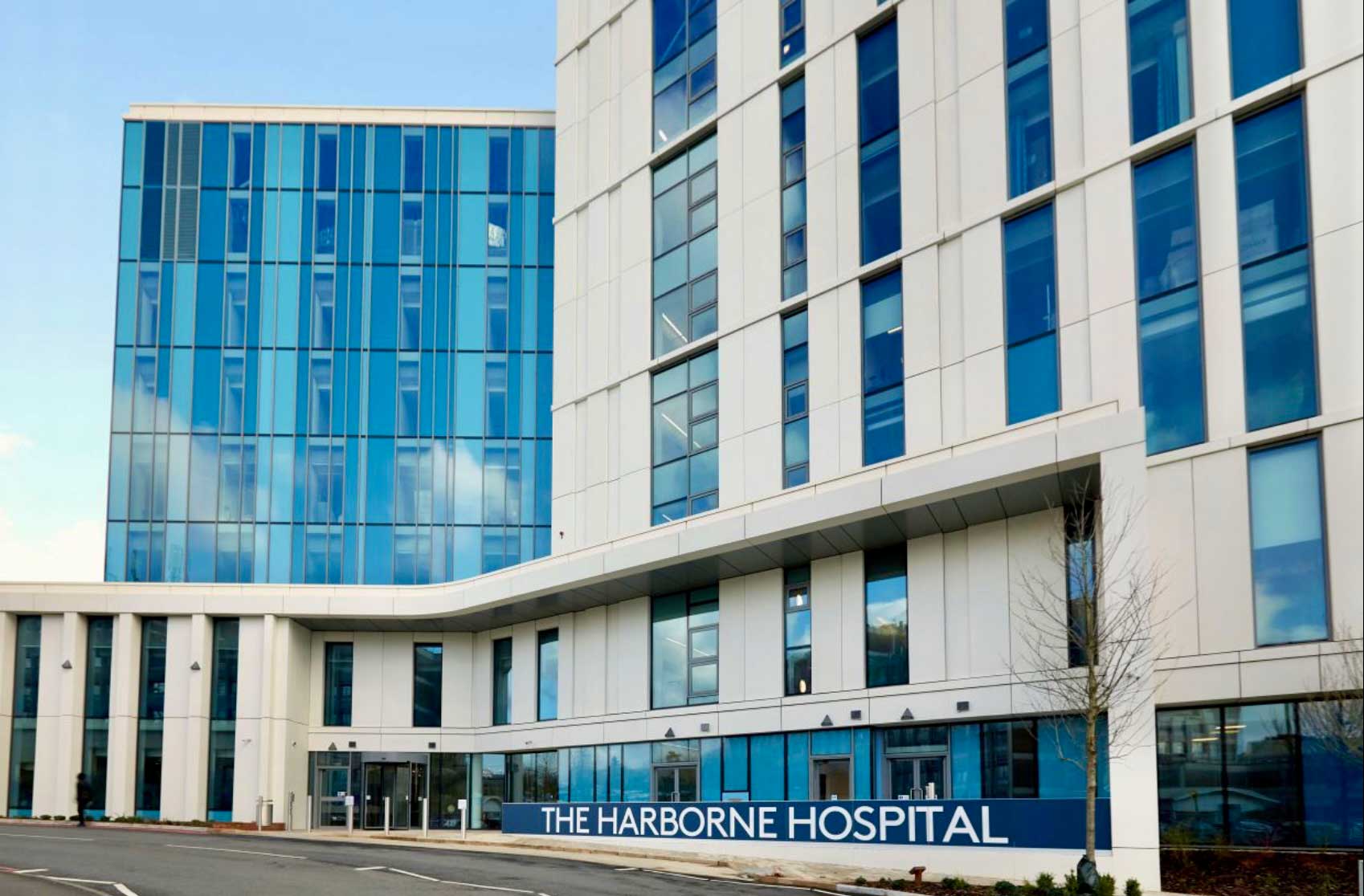
Uterine fibroid embolisation (UFE) at The Harborne Hospital
Dr. Crowe and his team can now offer uterine fibroid embolisation at The Harborne Hospital, the Midlands’ newest private hospital in Edgbaston, Birmingham.
New Location
With state of the art scanning and theatre facilities and the ambiance of a 5 star hotel a safe and comfortable procedure and recovery is assured.
The hospital is part of the HCA Healthcare UK group of hospitals and is recognised by all major insurance companies.

July is Fibroid Awareness Month
Fibroid Awareness Month
July marks Fibroid Awareness Month, dedicated to raising visibility and understanding of uterine fibroids, the most common benign or non-cancerous tumours of the uterus that may be present in up to 50% of women by age 50 though in most cases not requiring any specific treatment or surgery.
Fibroids may cause heavy periods that can be debilitating, may result in pain or bulk and pressure symptoms such as bladder pressure symptoms and urinary frequency. The may also be associated with fertility issues including recurrent miscarriages. There may be a family history of uterine fibroids and there are ethnic differences with black African and Caribbean populations having a significantly higher incidence.
While medications may manage and control some of the symptoms and associated heavy periods hysterectomy remains the most common surgery performed for uterine fibroids. Uterine artery embolisation (UAE) also know and Uterine fibroid embolisation (UFE) as offered by Dr. Crowe in Birmingham and London is a minimally invasive option which aims to shrink rather than physically remove the fibroids by depriving them of a blood supply. The procedure can preserve future fertility and allows early return to work and to normal activities.

Dr. Crowe is now a BUPA Platinum consultant
BUPA UK Insurance has launched BUPA Platinum consultants, a new category of consultant to help customers identify the best specialist for their healthcare needs.
BUPA Platinum consultants
BUPA Platinum consultants have been rated ‘Good’ or ‘Excellent’ by 97% of BUPA Customers and are covered on all BUPA policies or schemes.
Dr. Crowe is delighted to have been awarded BUPA Platinum consultant status.

Fibroids Support Group 2021
Fibroid Forum UK, a registered charity, runs a Fibroids Support Group with regular three monthly meetings which for 2021 have been taking place online. The meetings offer talks from guest speakers and an opportunity for women with fibroids to share experiences and offer mutual support.
Next Support Group
The next online meeting is Monday September 27th 6:30 – 8:00pm. For further informtion and details of how to sign up to the Fibroid Forum mailing list click Fibroids Support Group flyer 2021.

Opening of new Imaging Centre at BMI The Priory Hospital
Monday 26th February saw the official opening of the new Imaging Centre at the Priory Hospital.
Priory Hospital’s New Imaging Centre
The new centre features new state of the art CT and MRI scanners as well as enhancements like mood lighting in the scan room designed to create a relaxing and calming environment for patients undergoing scans.
The ribbon cutting ceremony was performed by Ian Bell MBE, England and Warwickshire cricketer and was well attended despite the snowy conditions in Birmingham on the evening.
Dr. Crowe (left) is pictured with Imaging Centre staff.

Opening of new Breast & Gynaecology Centre at Reddington Hospital
Dr. Crowe was guest speaker at the opening of the new Breast and Gynaecology Centre on Victoria Island, Lagos, Nigeria on 1st May 2017. The centre is part of the Reddington Hospital Group and was unveiled by wife of the Vice-President, Mrs. Oludolapo Osinbajo.\
The centre
The centre offers state of the art facilities for treatment of women’s health conditions.
Pictured at the opening ceremony from left, Dr. Crowe, CEO of Reddington Healthcare Group Dr. Yemi Onabowale, wife of Ondu State governor Mrs. Betty Anyanwu-Akeredolu, wife of the Vice-President Mrs. Oladolapo Osinbajo and wife of Oyo State governor Mrs. Florence Ajimobi. Dr. Crowe spoke on non-surgical treatment of uterine fibroids and while in Lagos was also a guest on NTA2 TV programme Close Flow with Fola Martins.

British Society of Interventional Radiology speaks to MPs
The British Society of Interventional Radiology (BSIR) took its campaign to improve the numbers of interventional radiologists in the NHS to Westminster this week.
At a reception organised by the Medical Technology Group, the BSIR met a number of MPs and discussed the issue of the lack of fully qualified and trainee interventional radiologists.
Royal College of Radiologists recent report
Dr Trevor Cleveland from Sheffield Teaching Hospitals, Vice President BSIR and Dr Paul Crowe, Birmingham Heartlands Hospital were able to discuss the Royal College of Radiologists recent report on their workforce census. This report highlighted the lack of radiologists across the UK and crisis we face in the next few years as many current radiologists hit retirement age.
The Royal College of Radiologists Report showed that in the ten year period from 2002-03 to 2012-13 showed:
- Number of imaging and radiodiagnostic examinations or tests increased from 27 million to nearly 40 million.
- Fewer than half the vacant interventional posts were successfully appointed to.
- In general radiology three in every four posts advertised at small and medium non-teaching hospitals failed to result in an appointment in 2012.
- A total of 283 unfilled consultant posts were identified as of 31 December 2012
- More than one in five of the consultant workforce in the East of England and South East Coast, and one in four in Wales, are estimated to retire in the next five years.
- Almost one in three of the current consultant clinical radiology workforce is expected to retire in the next ten years.
Dr Cleveland said:
“This is a critical issue that needs to be given significant Government focus. As we have seen the number of radiodiagnostic tests continue to increase every year as does the need for urgent image guided treatments. However, the number of qualified radiologists has not increased to support it. A significant number of tests are now being reported by Radiologists outside the UK, or by private suppliers. The situation is also acute in interventional radiology, especially when you look at the number of interventional radiologists that are set to retire in the next few years. Whilst there is a recognition that more Radiologists and Interventional Radiologists are needed, the overall increase in training numbers is tiny.
For patients the situation is critical. Access to radiology treatment conducted by qualified radiologists is critical in delivering rapid treatment to patients (including those suffering trauma, bleeding and strokes). Given the current Government’s objective of delivering a 7 day NHS, part of which will mean radiology services delivered 24/7, this situation needs addressing urgently.”
What is the BSIR?
The BSIR is a charitable foundation founded to promote and develop the practice of Interventional Radiology.
What are the main objectives of the society?
- To support and develop access to high quality information on Interventional Radiology for patients and all healthcare professionals.
- To support audit and research in Interventional Radiology
- To support education and training in Interventional Radiology

Dr. Crowe running the 2015 Birmingham Half Marathon
Dr. Crowe is running the 2015 Birmingham Great Run Half Marathon on Sunday October 18th and is fundraising for the Cystic Fibrosis Trust.
The CF Trust
The CF Trust is supporting research bringing us ever closer to a cure for the condition and ensuring that children diagnosed today are benefiting from optimal care and management from the outset.
Please visit Dr. Crowe’s JustGiving page and donate what you can. Thank you.